Short answer: A modern room sealed gas boiler can usually go in a cupboard, as long as the maker's installation instructions are followed. That means minimum clearances around the boiler, a flue route that meets the rules, and enough space for an engineer to remove the case and service it. Older open flue boilers may need air vents. Check your boiler manual.
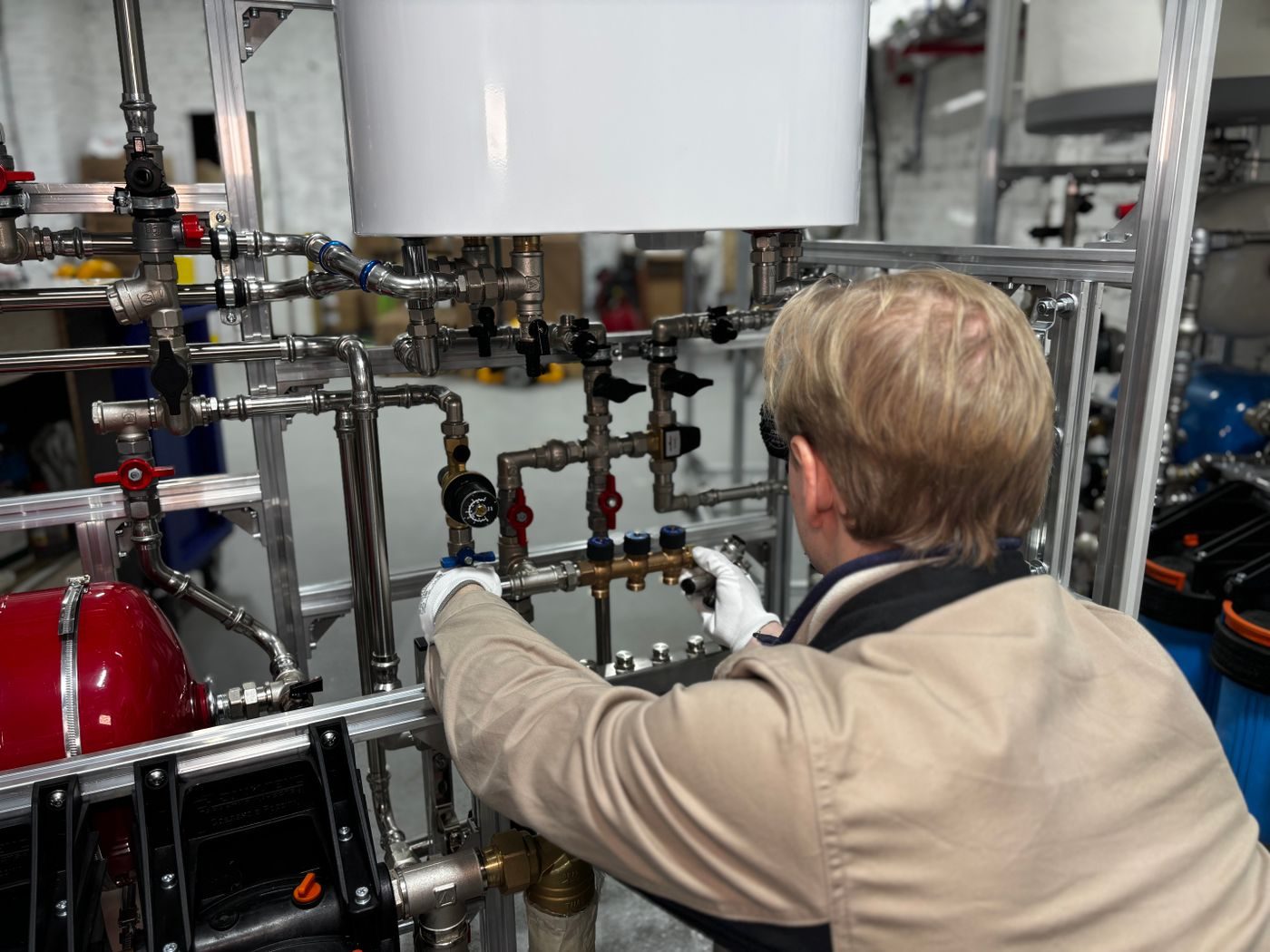
In London, boilers end up in cupboards all the time. When Victorian houses in places like Clapham, Brixton and Fulham were split into flats, each new flat needed its own boiler, usually put wherever it would fit. Today many sit in kitchen wall units, hall cupboards or utility spaces.
That is generally fine. But there are rules, and they matter at service time.
The basic rule: follow the maker’s instructions
There is no single law listing cupboard sizes for boilers. Instead, installers must follow the Gas Safety (Installation and Use) Regulations 1998, Building Regulations, and the boiler maker’s installation instructions. The manual sets out:
- Minimum clearances above, below, to the sides and in front of the boiler
- Clearances needed for servicing, which can be bigger than for normal use
- Whether the boiler can go in a cupboard or compartment
- Any ventilation needed
These figures change from model to model. Your boiler’s installation manual has them. If you do not have it, most makers put manuals online. Search for the exact model shown on the front panel or data badge.
Room sealed vs open flue
Room sealed boilers
Almost every modern gas boiler is room sealed. It takes air for burning from outside through the flue, and pushes fumes out the same way. The combustion chamber is sealed from the room. That is why these boilers can usually go in cupboards without extra air vents.
Open flue boilers
Older open flue boilers take air for burning from the room. They need permanent air vents to the room or outside, and these must never be blocked. If an open flue boiler sits in a cupboard, the cupboard usually needs ventilation too. These boilers are now uncommon in London flats, but some remain in older properties.
If you are not sure which you have, an engineer can tell you at a service.
Access for servicing
This is where cupboard boilers cause the most trouble. The maker’s manual usually gives a larger clearance in front of the boiler for servicing, so the case can be removed and the engineer can reach the parts inside.
Common problems common in converted flats:
- Kitchen wall units fitted tight around the boiler after a refit
- Shelves built into the cupboard below the boiler
- Boilers above fridges or tall units that need moving first
- Cupboard doors that only open partly
None of these always break the rules, but they make a service slower and can make it impossible to work safely. Before your annual boiler service, clear the cupboard and move anything stored around the boiler.
Flue routes from cupboards
The flue is the pipe that takes fumes out. From a cupboard in a converted flat, it usually goes straight through an outside wall. Sometimes it runs sideways or up through a ceiling to reach outside.
Where the flue ends outside, the terminal, matters. Building Regulations Approved Document J and the maker’s instructions set minimum distances from windows, doors, air bricks, corners and boundaries. In Clapham and similar areas, rear extensions and loft conversions are very common. A flue terminal that was fine when the boiler was fitted can end up too close to a new window or rooflight. Our Clapham area page covers this.
If the flue runs through a hidden void, such as above a ceiling, it must be possible to inspect it. Since 2013, the HSE flues in voids guidance says an engineer who cannot inspect a concealed flue must treat the boiler as at risk. See our post on flues in voids.
Boxing in a boiler
Many people want to hide a boiler behind a cupboard door. You can, if you:
- Keep the clearances in the manual
- Leave enough space to remove the case for servicing
- Keep any air vents clear, if your boiler needs them
- Do not cover the pressure gauge, controls or filling loop so you cannot reach them
- Leave access to the pressure relief valve pipe and condensate pipe
Some kitchen makers sell boiler housing units with ventilated panels. These can work, but check the boiler’s needs before buying.
Bathrooms and bedrooms
Boilers can be fitted in bathrooms if they meet electrical zone rules and the maker’s instructions. Room sealed boilers can usually go in bedrooms. Open flue boilers generally should not. Since 2022, landlords in England must fit a carbon monoxide alarm in any room used as living accommodation with a fixed combustion appliance, such as a gas boiler. Our post on carbon monoxide alarm rules explains more.
Who can move or box in a boiler?
Moving a boiler, changing its flue or changing anything on the gas side is gas work. It must be done by a Gas Safe registered engineer. Building a cupboard around a boiler is joinery, but it is wise to ask an engineer about clearances first.
Before a service: quick checklist
| Do | Why |
|---|---|
| Clear shelves and stored items | Engineer needs room to work |
| Open or remove cupboard doors | Easier access to the case |
| Clear access to the gas meter | Supply pressure is checked |
| Find the manual if you can | Benchmark section can be filled in |
| Tell us where the boiler is | Visit can be planned |
Gas work in the UK must be done by a Gas Safe registered engineer. Ask to see the ID card on arrival and check it on the Gas Safe Register.
Quick questions
Can I box in my boiler?
You can fit a cupboard around it if you keep the maker's clearances, leave access for servicing and do not block any air vents. Check the manual first.
Does a boiler cupboard need a vent?
Most modern room sealed boilers draw air from outside through the flue and do not need cupboard vents. Older open flue boilers may. Ask an engineer.
Can I store things in the boiler cupboard?
Keep the space clear. Stored items can block access, cover vents or press against the boiler.
Last updated 23 October 2026. Written for homes in London. Rules can change, so check the linked sources for the latest position.